Integrating AI Recruiting Tools With Your Existing ATS
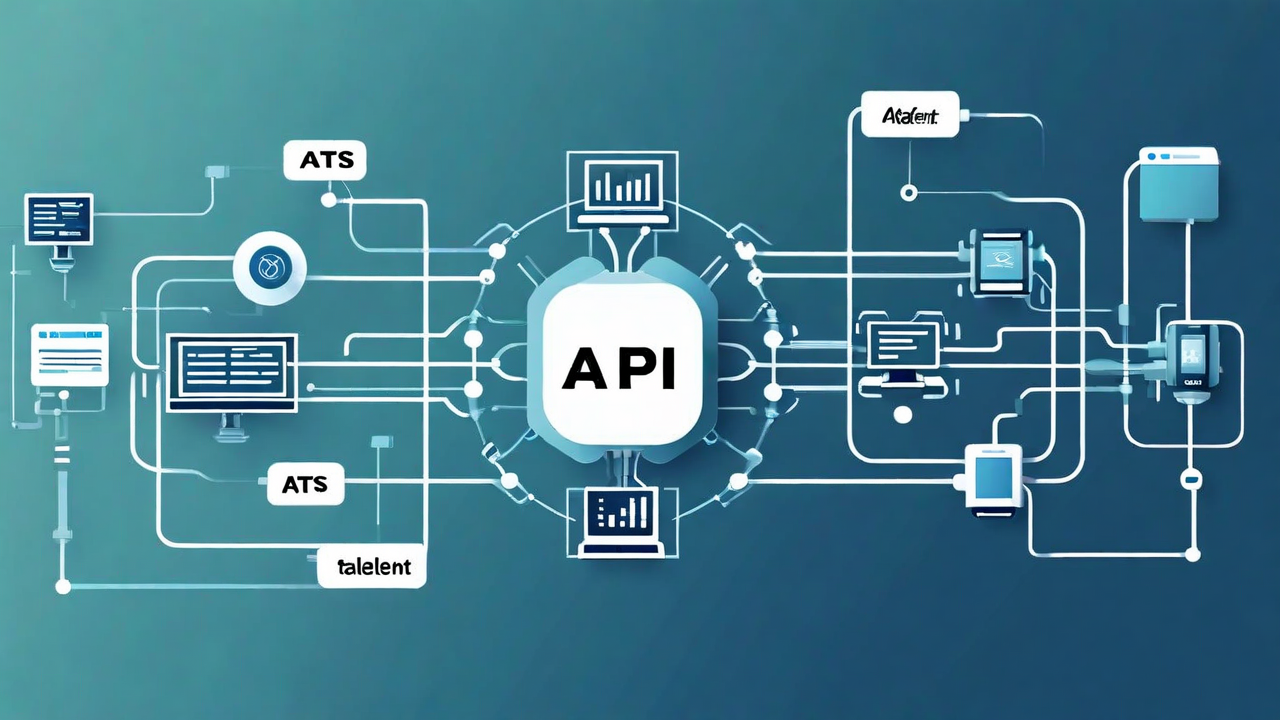
The applicant tracking system is the operational backbone of modern talent acquisition. ATS platforms like Greenhouse, Lever, Ashby, Workday Recruiting, and iCIMS collectively manage millions of candidates, requisitions, and hiring decisions every day. They are where recruiters live, where candidates apply, and where the data that drives hiring analytics originates. Any AI tool that aims to materially improve talent acquisition outcomes must integrate deeply with these systems — surfacing insights inside the workflows where decisions are made, not in a separate interface that recruiters must remember to consult.
Yet ATS integration is consistently one of the most challenging aspects of AI talent tool deployment. Technical complexity, data governance considerations, varying API capabilities across platforms, and organizational change management requirements all create potential failure points. This article provides a practical framework for talent acquisition leaders and HR technology teams navigating ATS integration decisions — what to evaluate, what to watch out for, and how to maximize the value of AI tools within your existing technology stack.
Understanding Integration Depth: A Spectrum of Options
Not all ATS integrations are created equal, and the depth of integration has a direct bearing on the value an AI recruiting tool can deliver. Integration options exist on a spectrum from shallow to deep, with meaningfully different implications for user experience, data quality, and ROI.
Shallow integrations typically involve one-way data export from the ATS to the AI tool — candidates are exported as CSV files or through basic API calls, analyzed by the AI platform, and results are returned as reports or ranked lists that recruiters must cross-reference manually with the ATS. These integrations are technically simple but operationally cumbersome: they require recruiter context-switching, create opportunities for data sync errors, and inevitably result in inconsistent usage as recruiters revert to simpler ATS-native workflows under time pressure.
Mid-depth integrations use the ATS API to surface AI insights directly within candidate records in the ATS — typically through custom fields, scorecards, or sidebar panels. Recruiters can see fit scores and AI recommendations without leaving the ATS interface, dramatically improving adoption and reducing the mental overhead of AI-assisted workflows. Most leading AI talent platforms offer this integration tier for major ATS platforms.
Deep integrations go further — enabling two-way data synchronization, AI-driven workflow triggers (automatically advancing highly scored candidates, flagging scoring anomalies, generating structured interview kits), and embedded analytics within the ATS reporting layer. These integrations provide the highest value but require more careful technical implementation and organizational change management to deploy successfully.
ATS-Specific Integration Considerations
The integration landscape varies significantly across the major ATS platforms, and organizations should evaluate AI tool integrations with their specific ATS in mind. Greenhouse offers one of the most mature and well-documented API ecosystems in the ATS market, with extensive webhook support, structured scorecard APIs, and a well-established partner ecosystem. AI tools that integrate with Greenhouse tend to offer the deepest integrations and have the most mature connector infrastructure.
Lever provides robust REST APIs with good candidate and opportunity data access, though its custom field architecture differs from Greenhouse in ways that affect how AI insights can be displayed within the candidate view. Lever's focus on collaborative hiring workflows means AI tools that surface insights in the candidate collaboration features tend to see better adoption than those that surface insights only in structured scorecard fields.
Workday Recruiting presents the most complex integration environment, due to Workday's platform architecture, security model, and API constraints. Deep integrations with Workday Recruiting typically require more IT involvement and longer implementation timelines than equivalent integrations with purpose-built ATS platforms. Organizations on Workday should evaluate AI tool vendors' specific Workday integration capabilities with particular rigor and should ask for customer references from Workday deployments.
Ashby, increasingly popular among high-growth technology companies, offers modern API capabilities and a flexible data model that makes deep integrations more achievable than its market share might suggest. The TalentPilot platform maintains active integrations with Greenhouse, Lever, Workday Recruiting, and Ashby, with integration depth scaled to each platform's API capabilities.
Data Governance and Privacy in ATS Integrations
ATS integrations involve the transfer of highly sensitive personal data — candidate names, contact information, work history, interview notes, evaluation scores, and in some cases compensation expectations. Before enabling any integration between an ATS and an AI tool, organizations should conduct a thorough data governance review covering data processing agreements, data residency requirements, retention policies, and access controls.
Key questions include: What candidate data does the AI tool receive, and is that data used to train shared models across customers? Where is data stored, and does that meet organizational data residency requirements? What is the AI tool's data retention policy for candidates who are not hired? How does the AI tool handle candidate data deletion requests under applicable privacy regulations? Are candidate evaluation data and AI model training data appropriately separated to avoid compliance risk?
Organizations in regulated industries — financial services, healthcare, federal contracting — should apply additional scrutiny to data governance requirements, as regulatory frameworks in these sectors often impose specific requirements on how candidate data can be processed, stored, and shared with third-party vendors. Engaging legal and compliance teams in the AI tool evaluation process, not just in the contracting phase, is strongly recommended.
Change Management: Making Integration Stick
The most technically sophisticated ATS integration will fail to deliver value if recruiter adoption is low. And low adoption is the most common outcome when integration projects treat technology deployment as the end goal rather than behavior change as the end goal. Change management for ATS integration projects requires deliberate investment in training, workflow redesign, and performance measurement.
Effective training for AI-integrated workflows goes beyond demonstrating how to read a fit score. Recruiters need to understand what signals the AI model is using, what it is optimizing for, how to interpret confidence levels and uncertainty, and critically, when to use their own judgment to override AI recommendations. Black-box AI that produces scores without explanation will generate low trust and inconsistent usage; explainable AI that shows its reasoning and supports recruiter learning produces much higher adoption and better outcomes over time.
Workflow redesign should be explicit about what changes with the integration in place. Where previously recruiters reviewed all applications before scheduling screens, what is the expected workflow now? Which stages rely on AI recommendations versus recruiter judgment? How are disagreements between AI recommendations and recruiter assessment handled and documented? Unclear expectations at these decision points create confusion and inconsistency that erode integration value.
Measuring Integration ROI
Integration ROI should be measured against a baseline established before integration deployment. Key metrics to track include screening-stage recruiter time per hire, time from application to first recruiter contact, shortlist-to-interview conversion rate, interview-to-offer conversion rate, offer acceptance rate, and 90-day quality-of-hire scores. Changes in these metrics following integration deployment provide the clearest picture of AI tool value.
Organizations should also track integration-specific operational metrics: AI recommendation adoption rate (the percentage of AI-recommended candidates that recruiters advance versus reject), disagreement rate and patterns (are certain recruiters or hiring managers consistently overriding AI recommendations, and why?), and data quality metrics (completeness and accuracy of candidate data flowing through the integration). These operational metrics enable continuous improvement of both the integration and the AI model's accuracy over time.
Key Takeaways
- Integration depth — from shallow data export to deep two-way synchronization — has a direct bearing on AI tool adoption and ultimately on ROI.
- ATS-specific integration capabilities vary significantly; evaluate AI tools against your specific ATS with reference to actual customer deployments on your platform.
- Data governance review covering data processing, residency, retention, and deletion must precede integration deployment — especially in regulated industries.
- Change management and recruiter training on explainable AI are as important as technical implementation for achieving high adoption and consistent value delivery.
- ROI measurement requires pre-integration baselines and both efficiency metrics (time-to-hire) and quality metrics (90-day performance scores).
Conclusion
Successful ATS integration is not primarily a technology project — it is an organizational change project supported by technology. Organizations that invest appropriately in integration depth, data governance, change management, and ROI measurement consistently achieve the dramatic efficiency and quality improvements that AI recruiting tools promise. Those that treat integration as a checkbox activity typically find that AI tools remain underutilized and under-performing against expectations. Learn how TalentPilot integrates with your ATS to deliver talent intelligence directly inside your existing workflows.